Source x-cube prism for Beam Splitting, Dispersion, and Medical Use
Find 30 verified x-cube prism options from Fuzhou and Changchun suppliers. Buyers can compare models like CCP8 and CCP25.4 with BK7 glass, clear coatings, and diameters ranging from 8mm to 25.4mm for beam splitting and dispersion applications.
Key considerations
Products List





Comprehensive Sourcing Guide
Strategic Sourcing Guide for X-Cube Prism Procurement
Navigating the global market for optical components requires a disciplined approach, particularly when sourcing specialized items like the X-cube prism. This optical element is critical for applications involving beam splitting, dispersion, and color separation in high-precision systems. For procurement professionals, the challenge lies in distinguishing between generic optical glass and specialized prisms designed for specific wavelengths and mechanical tolerances. The following guide synthesizes available market data and technical requirements to establish a robust framework for evaluating suppliers and ensuring component integrity.
Understanding the Technical Architecture of X-Cube Prisms
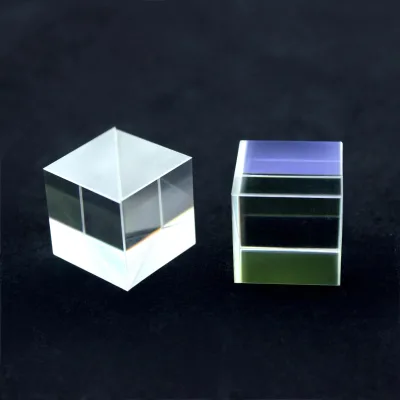
The X-cube prism, often categorized under beam splitters or cube corner prisms, is a complex optical assembly designed to manipulate light paths with high fidelity. In the context of current market offerings, these components are frequently described by their geometric shape and functional application. The observed product attributes indicate a "Cube Corner Prism" shape, which is distinct from standard flat lenses or single-lens configurations. The primary function of these units is "Beam Split" and "Beam Dispersion," making them indispensable in digital devices, medical instruments, and advanced optical systems.
A critical technical differentiator is the material composition. While general optical glass is common, high-performance X-cube prisms often utilize specific glass types such as BK7. The availability of BK7 material suggests a focus on high transmission and low dispersion characteristics, which are essential for maintaining signal integrity in the 1100-1600nm wavelength range. Buyers must verify that the specific unit under consideration matches the required spectral range, as absorption rates can vary significantly. For instance, observed data points to an absorption rate of approximately 10% for certain configurations, a figure that must be weighed against the efficiency requirements of the end application.
The physical dimensions of the prism are equally vital. Market observations reveal a wide range of effective diameters, from 8mm to 25.4mm (1 inch), with intermediate sizes like 10mm and 17.8mm (0.7 inches) also available. The standard "diameter" specification is a primary identifier for compatibility with existing optical mounts and housing. Procurement teams must ensure that the selected model, whether designated as CCP8, CCP10, or CCP25.4, aligns precisely with the mechanical constraints of the assembly. Furthermore, the angle precision is a non-negotiable metric; observed specifications indicate a tolerance of less than 5 arc seconds, a standard that ensures minimal deviation in the light path.
Compliance, Certification, and Material Standards
In the B2B optical supply chain, compliance is not merely a formality but a prerequisite for operational reliability. The market data highlights specific certifications and standards that serve as benchmarks for quality assurance. The presence of CE and ISO Coating certifications indicates that the manufacturing processes adhere to international safety and quality management systems. These certifications are particularly relevant for suppliers originating from regions like Fuzhou, Fujian, China, and Changchun, China, where optical manufacturing clusters are prominent.
When evaluating a supplier, buyers should request documentation that confirms the "Standard" designation of the product. Observed standards include specific dimensional tolerances such as "diameter 8mm" or broader ranges like "1-300mm" and "3-200mm." Additionally, third-party verification standards like SGS are noted, suggesting that independent testing of material purity and dimensional accuracy is a common practice in this sector. However, it is crucial to note that not every listed product satisfies every certification; buyers must verify that the specific batch or model possesses the required CE or ISO status before finalizing a purchase order.
The material standard is another area requiring rigorous verification. While "Optical Glass" is a broad category, the specific mention of "BK7" as the prism material points to a high-grade silicate glass known for its homogeneity and thermal stability. For applications involving fiber laser welding or medical instruments, the glass must meet stringent purity levels to prevent internal scattering or thermal lensing. Buyers should confirm that the material specification explicitly states the glass type and that the coating process, such as Silver or Copper, is applied according to the required optical density and reflectivity standards.
Cost Drivers and Pricing Dynamics
The pricing structure for X-cube prisms is influenced by a confluence of technical and logistical factors. The observed price range in the market spans from $0.10 to $100.00 USD, a variance that reflects differences in size, material quality, coating complexity, and order volume. The lower end of the spectrum typically corresponds to smaller, standard-diameter prisms with basic coatings, while the upper end reflects larger units, custom specifications, or those with high-precision angle tolerances.
Minimum Order Quantity (MOQ) is a significant cost driver. The market data indicates an MOQ range of 1 to 500 units. Suppliers offering an MOQ of 1 are typically catering to prototyping or R&D phases, where flexibility is prioritized over unit cost reduction. Conversely, suppliers with an MOQ of 500 are positioned for mass production, offering economies of scale that can significantly lower the per-unit price. Buyers must balance their immediate needs with long-term volume projections to optimize their total cost of ownership.
Customization is a primary factor influencing price. The availability of "Customized" options and "Customized" shapes allows for tailored solutions but inherently increases the cost due to the setup and tooling required. The "Air Cushion Wrapped Carton Packaging" and "Plastic Box" options also contribute to the final cost, especially for high-value items requiring specialized protection during transit. Buyers should evaluate whether the standard packaging provided by the supplier meets the shock and vibration requirements of their logistics chain or if additional protective measures are necessary, which could impact the overall budget.
Typical Applications and Usage Scenarios
The versatility of the X-cube prism is evident in its diverse application landscape. The observed usage categories include "Beam Split," "Beam Dispersion," and specific industrial functions like "Metal Material Welding" and "Fiber Laser Welding." This indicates that these components are not limited to a single industry but serve as critical enablers in fields ranging from medical instrumentation to digital device manufacturing.
In the medical sector, the precision of the X-cube prism is paramount. The "Medical Instrument" application suggests use in diagnostic imaging, laser surgery, or optical coherence tomography, where even minor deviations in beam alignment can compromise patient safety or diagnostic accuracy. The "Clear" color and high transmittance (>95%) are essential attributes here to ensure maximum light throughput and minimal signal loss.
For industrial applications, particularly in laser welding, the prism must withstand high-energy environments. The "Function: Metal Material Welding" and "Used for: Fiber Laser Welding" attributes highlight the component's role in directing high-power laser beams. In these scenarios, the material's thermal stability and the coating's durability are critical. The "Digital Device" application further expands the scope to consumer electronics, where X-cube prisms are used in projectors, sensors, and imaging systems to manage color separation and light distribution.
Supplier Evaluation and Origin Verification
Selecting the right supplier requires a thorough vetting process that goes beyond price comparisons. The origin of the product is a key indicator of manufacturing capability and supply chain reliability. The data identifies "Fuzhou," "Fuzhou Fujian China," and "Changchun, China" as primary production hubs. These regions are known for their concentration of optical manufacturing facilities, but buyers must verify the specific capabilities of the supplier within these locations.
When evaluating a supplier, buyers should assess their ability to provide "Customized" solutions. The attribute "Customization: Available" suggests that many suppliers are flexible, but the extent of this customization varies. Some may offer standard sizes with minor adjustments, while others can produce bespoke shapes and coatings. The "Product Name: Crystal Rod ND YAG" and "Type: Flat Lens" attributes in the data suggest that some suppliers offer a broad portfolio of optical components, which can be advantageous for consolidating procurement.
The packaging method is another indicator of supplier professionalism. The observed "Air Cushion Wrapped Carton Packaging" and "Carton" options indicate a focus on product protection. However, for high-precision optics, the internal packaging must be designed to prevent micro-scratches and contamination. Buyers should request detailed packaging specifications to ensure that the prisms will arrive in pristine condition, ready for immediate integration into sensitive optical assemblies.
Quality Control and Long-Term Procurement Strategy
Ensuring consistent quality in X-cube prism procurement requires a robust quality control (QC) framework. The "Angle Precision: <5"" specification serves as a baseline for optical performance, but buyers should implement incoming inspection protocols to verify this tolerance on every batch. The "Transmittance: >95%" and "Absorption: 10%" metrics should be validated through independent testing, especially for high-volume orders where statistical sampling might miss defective units.
Long-term procurement considerations involve building a relationship with suppliers who can maintain consistency over time. The "Standard: SGS" and "Standard: Customized" attributes suggest that suppliers are accustomed to working with quality standards, but the "Customized" nature of the standard also implies that specifications can change. Buyers should establish clear technical agreements that define the acceptable range for all critical parameters, including diameter, angle precision, and coating quality.
The "Lead Time" and "MOQ" dynamics also play a role in long-term strategy. Suppliers with flexible MOQs are valuable for maintaining a responsive supply chain, allowing buyers to adjust orders based on demand fluctuations. However, for stable, high-volume production, securing a contract with a supplier who can guarantee consistent lead times and volume pricing is essential. The "Product Packing" and "Origin" details should be locked into the contract to prevent supply chain disruptions caused by unexpected changes in manufacturing location or packaging standards.
Conclusion
Sourcing X-cube prisms requires a meticulous approach that balances technical specifications, compliance requirements, and cost considerations. By understanding the nuances of material composition, dimensional tolerances, and application-specific needs, buyers can make informed decisions that ensure the reliability and performance of their optical systems. The market offers a wide range of options, from standard 8mm prisms to custom 25.4mm units, each with unique attributes that must be carefully evaluated. Through rigorous supplier evaluation and a commitment to quality control, procurement professionals can secure a supply chain that supports the demanding requirements of modern optical engineering.
FAQs
What materials are used for x-cube prisms?
X-cube prisms are typically made from BK7 glass or general optical glass. These materials ensure high transmittance and low dispersion for precise beam splitting applications in medical and digital devices.
Which certifications do x-cube prism suppliers hold?
Suppliers often hold CE and ISO Coating certifications for their optical components. Buyers should verify specific batches possess these standards to ensure compliance with international safety and quality management systems.
How is the angle precision defined for these prisms?
The angle precision is specified as less than 5 arc seconds. This tight tolerance ensures minimal deviation in the light path, which is critical for high-fidelity beam splitting in advanced optical systems.
Can x-cube prisms be customized for specific needs?
Yes, customization is available for shape, standard, and coating requirements. Buyers can request tailored solutions such as specific diameters or packaging types like air cushion wrapped cartons to fit unique assembly constraints.
What is the effective diameter range for x-cube prisms?
Effective diameters range from 8mm to 25.4mm, including sizes like 10mm and 17.8mm. These dimensions must align with existing optical mounts and housing constraints for proper mechanical integration.
Where are x-cube prisms typically manufactured?
Manufacturing origins include Fuzhou, Fujian China, and Changchun, China. These regions host optical manufacturing clusters, but buyers must verify the specific capabilities of the supplier within these locations.